.png)

Talks and abstracts
Plenary speakers
We are honoured to have as our invited speakers this year:

|
Prof. Martin Liebeck, from Imperial College LondonProf. Liebeck has worked in many areas of group theory, making notable contributions to the theory of algebraic groups as well as the finite simple groups and probabilistic group theory. He is also interested in permutation groups and algebraic combinatorics, investigating the links between groups and various combinatorial structures. |
Girth, words and diameters of Cayley graphs
The girth of a graph is the minimal length of a cycle in the graph. Finding regular graphs with large girth relative to their diameter is the subject of much interest, and a fruitful source of examples has been found in Cayley graphs of various families of finite classical groups. I shall discuss some new results in this area on the girth of Cayley graphs of finite classical groups G on random sets of generators. The main tool is a new bound on the probability that a given word w takes the value 1 when evaluated in G, in terms of the length of w.
|
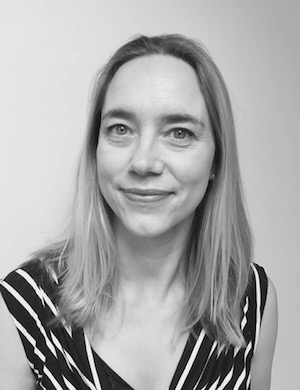
Prof. Colva Roney-Dougal, from The University of St AndrewsProf. Roney-Dougal has varied research interests, including computational group theory problems relating to matrix and permutation groups. She has also worked on the random generation of groups, and is one of the authors of a book classifying the maximal subgroups of low-dimensional classical groups. |
Computing with finite simple groups
This talk will give a gentle introduction to computing with matrix groups over finite fields, concentrating especially on the simple groups. As input we have a set of matrices over a finite field, and we would like to solve two key problems. Firstly, we would like to know the composition factors of the group G that they generate, and secondly, we would like to be able to test whether an arbitrary matrix belongs to G. I will describe some of the key ideas that go into solving this problem, and if time permits I will present some recent work and open problems.
They will deliver the opening and closing talks, respectively.
The titles and abstracts of all contributed talks are available below, as well as through this link.